
Many people think of Valentine’s Day when they hear “Loving Day,” but this celebration carries a very different kind of love: one that broke barriers. Loving Day is about real people, real laws, and a real fight for the right to love freely. For interracial couples today, especially those navigating cross-cultural relationships as expats or digital nomads, this day is more than history. It’s a legacy.
How to Date a Foreigner is the #1 resource and community helping expats, digital nomads, and students overseas confidently navigate international relationships.
As explored in our guide on interracial relationships, understanding the roots of cultural resistance to love helps us move through our fears and celebrate connection more fully.
Let’s explore Loving Day together and discover how it can impact your relationship journey.
Who were Richard and Mildred Loving, and why did their marriage matter?
Richard Loving was white. Mildred Loving was Black and Native American. In 1958, their decision to marry in Washington, D.C. was not just a personal one; it was political. When they returned to their home in Virginia, they were arrested for breaking the state’s anti-miscegenation laws.
They were sentenced to a year in prison, just for being married. What was their crime? “Cohabiting as man and wife, against the peace and dignity of the Commonwealth.”
For interracial couples today, especially those who live across borders or cultures, it’s hard to imagine a time when love like theirs meant jail time. But their love was bold in a way that defied fear, and quietly, it changed everything.
Their quiet strength launched a legal case that would forever change marriage in America.
What was the Loving v. Virginia case, and why did it change everything?
After their conviction, the Lovings moved to D.C. but missed their home. In 1967, they appealed their case to the U.S. Supreme Court. That case, Loving v. Virginia, became a turning point.
The court unanimously struck down laws banning interracial marriage. The ruling not only freed the Lovings to live where they wanted. It invalidated similar laws in 15 other states.
It was a monumental moment for civil rights and romantic freedom alike.
In 2007, Mildred Loving reflected on the 40th anniversary of the decision with these words:
“My generation was bitterly divided over something that should have been so clear and right. The majority believed that what the judge said, that it was God’s plan to keep people apart, and that government should discriminate against people in love. But I have lived long enough now to see big changes. The older generation’s fears and prejudices have given way, and today’s young people realize that if someone loves someone they have a right to marry.”
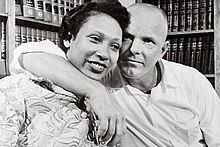
Mildred and Richard Loving in 1967
What is Loving Day, and how is it celebrated?
Loving Day is observed every June 12th: the anniversary of the court decision. Though not a federal holiday, it’s widely celebrated by interracial couples, families, and activists.
It’s a moment to honour progress, reflect on resistance, and celebrate the courage it takes to love across lines others once tried to draw.
You’ll find local events, educational talks, and heartfelt social media posts from couples all over the world.
Some people celebrate privately, with a special dinner or shared reflection. Others mark it by exploring stories like the Lovings’ to deepen their understanding of love’s resilience.
This is also a powerful moment to revisit your partner’s history: see how your relationship connects to broader struggles and wins. That’s part of what we talk about in our take on unlocking your partner’s story for a deeper connection.
How did interracial marriage evolve after 1967?
The legal ruling was clear, but hearts and habits changed more slowly. Many states were slow to update their laws. In fact, Alabama didn’t officially repeal its anti-miscegenation law until 2000.
Still, numbers tell a story of real progress. According to Pew Research, just 3% of U.S. newlyweds were in interracial marriages in 1967. By 1980, that rose to 7%. By 2015, it reached 17%, and continues to grow.
Among Black newlyweds, the rate of intermarriage more than tripled. These shifts don’t just reflect legal change: they reveal a cultural opening to relationships once seen as taboo.
Of course, challenges remain. Biases still surface. But the courage of the Lovings (and many who came after) built a new path forward.
Want help navigating that space today? We explore how modern expats and cross-cultural couples can set relationship goals that bridge cultures, even when the world hasn’t caught up yet.
What can Loving Day teach us about dating across cultures today?
Loving Day goes beyond a court case: it reflects what it means to choose love despite pressure, judgment, or fear.
For anyone in an intercultural or interracial relationship, their story reminds us that connection often challenges norms and that’s okay.
It’s a prompt to ask: What fears or assumptions are you still carrying? What histories are shaping your partner’s view of relationships?
It’s not about perfection. It’s about courage, care, and showing up.
The Lovings didn’t seek fame. They just wanted to live at home, in peace. That simple dream sparked something huge.
And for anyone in a global relationship today, it’s a reminder: your love is powerful. Your story matters.
FAQ
What should I know before dating someone of a different race or background?
Every culture carries unspoken rules, values, and biases. Take the time to understand your partner’s experience, especially around race and family. Loving Day reminds us that respect and empathy are not abstract values: they form the foundation of every meaningful relationship.
How did Loving Day get its name?
It’s named after Richard and Mildred Loving, the couple at the centre of the 1967 Supreme Court decision that struck down bans on interracial marriage.
Is interracial marriage still controversial in some places?
Yes. While many countries are more accepting today, some cultures and families still hold biases. It’s important to discuss these realities early and openly in any relationship.
Conclusion
Loving Day honours two people who turned a simple act of love into a landmark change. Richard and Mildred weren’t trying to be heroes; they just wanted the freedom to love and live together.
Their story is a reminder that real change often begins quietly. With love, resilience, and commitment.
Dating a foreigner or someone of a different race may bring challenges, but it also offers deep growth.
If you are ready to build a stronger, more resilient intercultural relationship, we are here to help. Explore our book How to Date a Foreigner for real-life stories, expert insights, and practical tools. Or join our online courses to learn how to navigate cultural differences with more clarity and confidence, right from wherever you are in the world.